The Double Hit Every Dog Owner Should Know
Jump to: Before You Leave → On the Boat → Midday → Docking → Aftercare
Quick Prep Checklist
Before you cast off, make sure you’ve got:
- ✓ Sun Suit
- ✓ Pet Sunscreen (zinc-oxide-free)
- ✓ Fresh Water (for drinking and rinsing)
- ✓ Towel
- ✓ Shade (umbrella, bimini, or a shaded corner of the boat)
- ✓ Water Bowl
Before You Leave
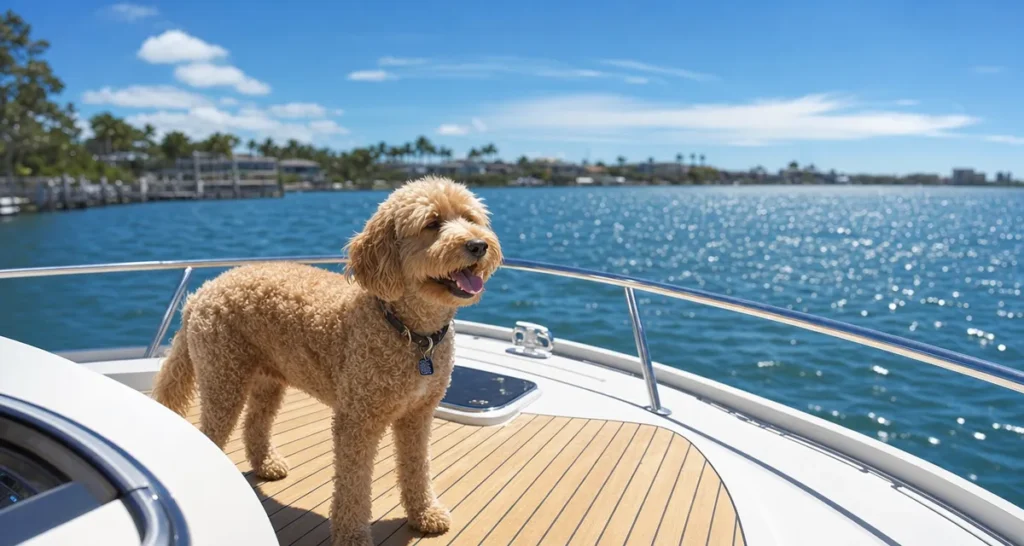
It’s 8 a.m., you lift your dog onto the deck, and the sea breeze gets them instantly excited — running circles, paws up on the rail, watching the water. The forecast says “partly cloudy,” which feels like a safe day to be out.
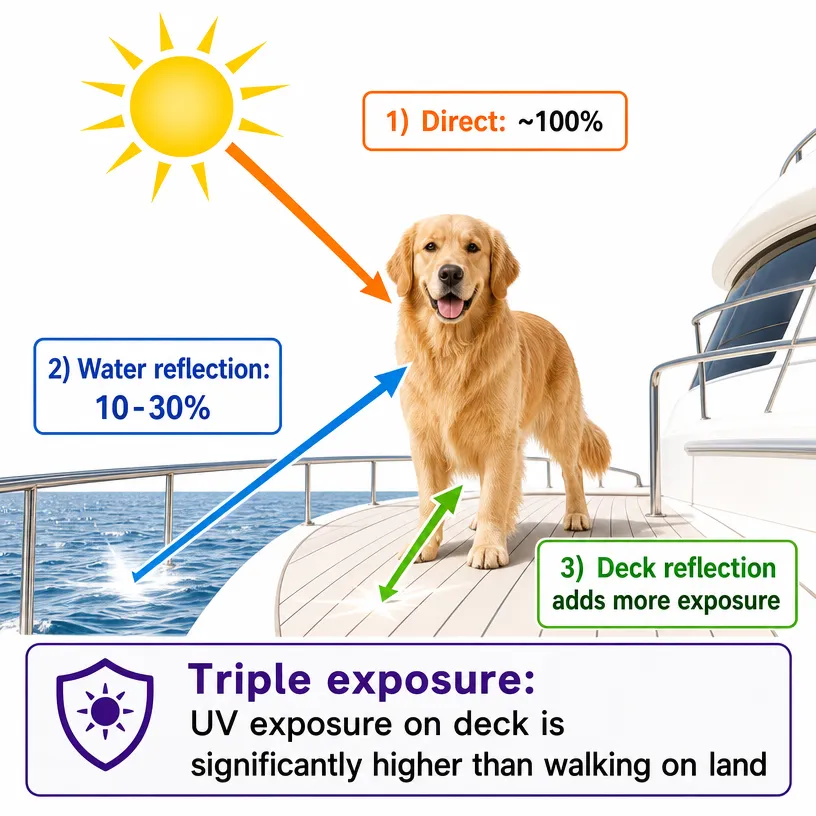
Two things are easy to overlook here. First, the deck itself is highly reflective — white hulls and fiberglass surfaces bounce a portion of UV rays right back up. Second, “partly cloudy” doesn’t mean safe: even on an overcast day, most UV still passes straight through the clouds. It just doesn’t feel as intense, which makes it easier to let your guard down.
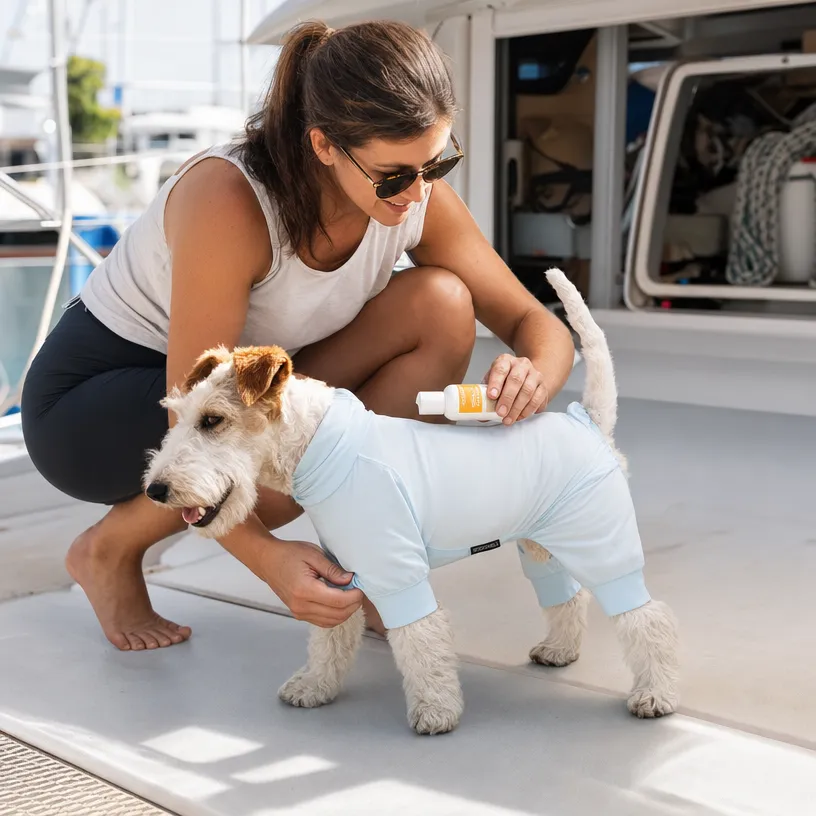
What to do at this stage: 15–20 minutes before boarding, put your dog in a lightweight four-legged sun suit, and dab on some zinc-oxide-free pet sunscreen on spots the suit won’t cover — nose, ear tips. Don’t wait until you’re already on deck; it’s easy to forget once the wind picks up.
On the Boat
Once you’re out on the water, the breeze keeps things feeling cool — no sense of “harsh sun” at all. This is exactly why sunburn on the water sneaks up on people: wind carries away the feeling of heat, but it does nothing to the UV itself. According to NOAA’s environmental health research, even calm fresh water reflects roughly 5–10% of UV radiation, and choppy seawater can bounce back as much as 20–30%. Add the boat’s own reflection on top of that, and the total UV dose you and your dog are getting is meaningfully higher than a walk on a grassy lawn.
If your dog isn’t fully used to the motion of the boat yet, this is often when early signs of seasickness show up: excessive lip-licking, swallowing, unusual quietness, or the opposite — clinging to you and refusing to move.
What to do at this stage: Don’t rely on “does it feel hot” to decide when to reapply sunscreen — set a phone reminder instead. Sunscreen loses effectiveness fairly quickly once it gets wet or sweated off, so reapplying roughly every one to two hours is a reasonable rule of thumb. If your dog is showing signs of seasickness, get them into the shade and offer a small amount of fresh water rather than forcing food — skipping a meal in the hour before departure and offering small sips of water throughout the trip tends to go a lot better than a normal feeding schedule.
Later in the day, once your dog has worn themselves out, keep checking in — a hand on the belly and paws every so often tells you a lot. If they seem to be actively seeking shade or panting more than usual, that’s worth acting on right away rather than chalking it up to “just tired” (more on that below).
Midday
By noon, direct sun is strongest, and reflection off the water and deck stacks on top of it — this is the highest-UV window of the day. One skin screening conducted at a competitive sailing regatta found that more than a third of participating sailors had some kind of suspicious skin lesion. That study was about people, not dogs, but it’s a useful reminder of just how intense a boat deck’s UV environment really is. The nose, ear tips, and belly — all thin-furred areas — are absorbing UV the whole time, even though the skin still looks and feels normal in the moment. The damage is cumulative, not immediate, which is exactly why “looks fine” isn’t a reliable safety check.
What to do at this stage: This is the window to proactively schedule shade breaks, even if your dog is having the time of their life. Bring them under cover every so often and do a quick paw-and-belly check for warmth. If the boat has a shaded area, keep in mind that reflected light still reaches into shade — thin-skinned areas aren’t fully protected just because they’re out of direct sun, so don’t skip the suit or sunscreen there either.
The moment you feel warmth or redness on a check, don’t wait until you’re back home — get them into shade right away and use fresh water on board to cool them down, watching for continued avoidance of touch or a drop in energy. If they’ve been swimming, rinsing off the coat and paws with fresh water while you’re still on the boat does a lot more good than waiting until later — it cuts down on how long the salt keeps working on the skin.
Docking
Back at the dock, your dog seems okay — maybe even calmer than when you left. The skin usually still looks fine at this point, which is exactly what makes it easy to assume nothing happened today.
What to do at this stage: Regardless of how normal things look, the first thing to do after docking is a full fresh-water rinse — paws, belly, and ears especially — to actually wash the salt off, rather than a quick towel-down. While you’re at it, check inside the ears and between the toes for any leftover sand or salt residue.
Aftercare
That night, you feel a small patch of warm, red skin on the belly. The next morning, the ear tips and chin — areas that “shouldn’t” get sunburned — are red too. That’s the water’s reflected light hitting from below, reaching spots a normal walk on land almost never touches. At the same time, your dog may be scratching and chewing at their legs and belly more than usual — that’s usually the salt’s ongoing irritation catching up, not something that happened today.
What to do at this stage: For mild redness, a cool water compress and keeping them out of the sun is usually enough to settle it down on its own. If you see peeling, scabbing, or blisters, or your dog stays low-energy, that’s when a vet visit makes sense rather than handling it at home. If this keeps happening trip after trip, thin-skinned areas do carry a real long-term risk of developing more serious skin conditions, including some forms of skin cancer — which is exactly why sun protection on a boat can’t be a one-time application before you leave the dock.
The “double hit” on the water is dangerous precisely because it doesn’t announce itself the way sunburn on land does — the wind keeps masking how it feels, while the UV keeps stacking up regardless. Turning “suit on, reapply on schedule, shade at midday, regular warmth checks, rinse at the dock” into a standard routine for every trip is a lot easier than dealing with the aftermath later.
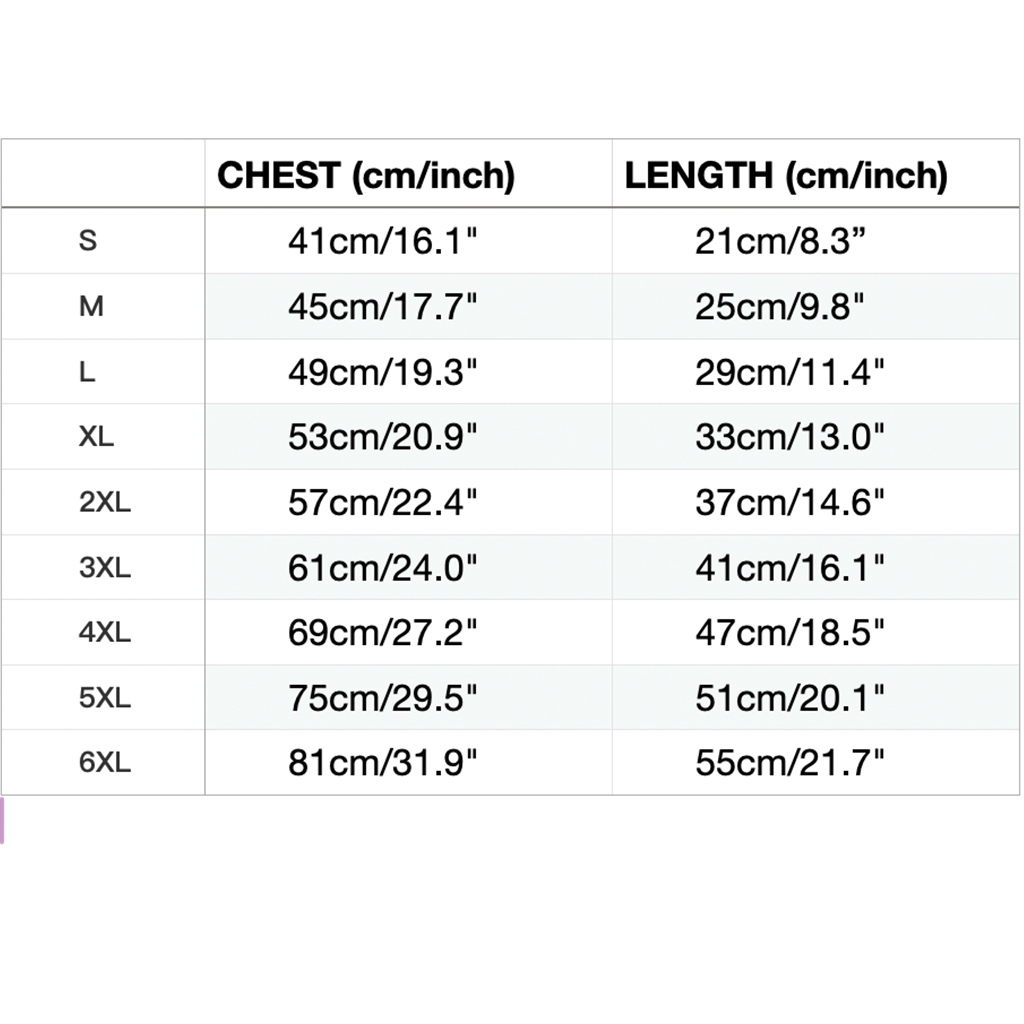
Preparing for your next boat adventure? Explore our lightweight summer collection, sized from small companions to big adventure dogs — shop the collection here.