If you’ve got a French Bulldog, Pug, Boston Terrier, or any other flat-faced breed, you already know summer is a bigger deal for them than for most dogs. What’s less talked about is why — and why that “why” actually changes how you should think about sun protection, not just heat.
Their Cooling System Has a Built-In Flaw
Dogs don’t really sweat like we do. Their main way to cool down is panting — moving air fast over the tongue and the inside of the nose so moisture can evaporate and carry heat away.
Flat-faced breeds have a condition vets call BOAS (Brachycephalic Obstructive Airway Syndrome), and it’s not just “they breathe a little louder.” Their skulls are shorter, which compresses the nasal passages, narrows the nostrils, and often leaves extra soft tissue crowding the airway. That’s the exact same airway they’d need to pant efficiently through.
Here’s the part that makes it worse: for a normal dog, panting harder when it’s hot works — more airflow, more cooling, temperature comes back down. In many dogs with BOAS, that same response can backfire — faster airflow through an already-narrow space can cause more swelling and strain, narrowing things further. The harder they try to cool off, the harder it can get. It’s a design flaw, not a stamina issue — no amount of “just let them rest” fixes the airway itself.
Which Is Why Clothing Isn’t a Simple “Yes”
This is where it gets tricky. Covering more skin usually means better sun protection — that’s true for any dog. But for a flat-faced dog, more coverage also means less airflow around the body, which adds heat load on top of a cooling system that’s already working at a disadvantage.
Because flat-faced breeds already have a reduced ability to dissipate heat, any clothing that traps extra warmth deserves extra caution — not because the fabric is different from what a Labrador might wear, but because the dog underneath has less room for error.
One thing worth clearing up, since it comes up a lot: a cooling vest (the kind you soak in water for evaporative cooling) and a sun-protective vest (UPF fabric, worn dry) are two completely different tools solving two different problems. Neither one automatically does the other’s job, so it’s worth knowing which one you’re actually reaching for.
Skin Adds a Second, Separate Risk
Flat-faced breeds also tend to have thin, short coats — which means less natural coverage from the sun to begin with. The nose bridge, ear tips, and belly are usually the thinnest-furred and most exposed.
On top of that, most of these breeds have facial and body skin folds, which trap moisture easily. Sun exposure on skin that’s already prone to fold-related irritation isn’t a separate problem from that irritation — the two tend to make each other harder to manage, which is part of why keeping folds clean and dry matters just as much as sun coverage does.
So What Actually Helps?
Being honest here: there’s no major veterinary body that’s published clear guidance specifically on sun suits for flat-faced dogs. What does exist is a well-established, unrelated fact — heat risk for these breeds is serious, and overheating can turn dangerous fast, faster than sunburn ever will. That ordering matters for every decision below.
Start with the free stuff. Avoid the 10am–4pm window entirely, stick to shade, keep outings short. This does more for a flat-faced dog than any product on the market, and it comes with zero heat trade-off.
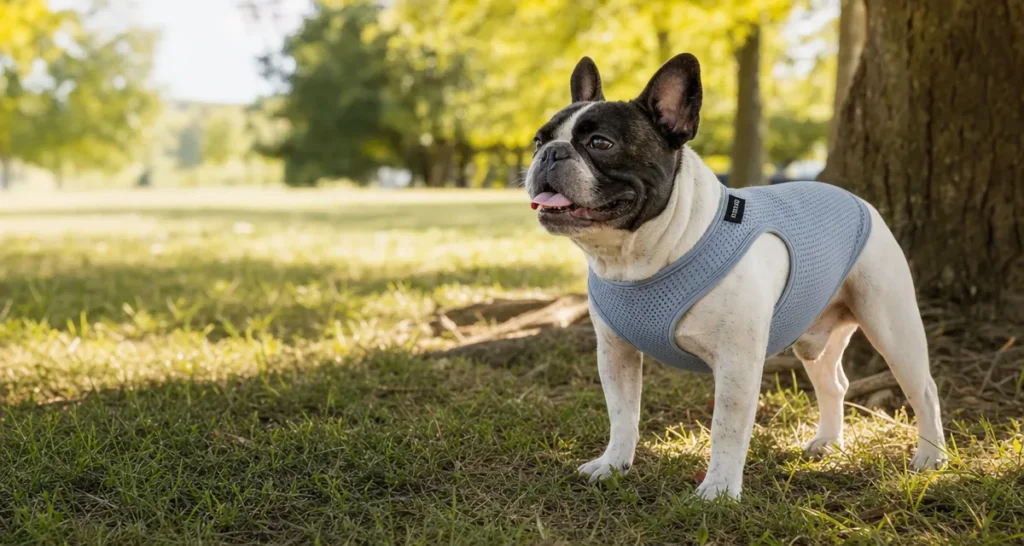
If you do use clothing, many owners lean toward lighter designs. A loose, breathable vest that covers just the back and chest — rather than a snug, full-body, four-leg suit — is a common starting point for owners trying to add some coverage without adding much heat. Skip anything tight around the chest or neck regardless of style.
Watch, don’t guess. If breathing gets heavier, drooling picks up, or your dog seems agitated, the suit comes off immediately. No outfit is worth pushing past that line.
Skip the “just shave them” idea too. It doesn’t help these breeds cool down much, since most of them don’t have the dense double coat that shaving would even affect — it mostly just removes what little sun protection they had in the first place.
The Honest Bottom Line
For flat-faced dogs, heatstroke risk outranks sunburn risk, full stop. Anything you put on your dog needs to pass that test first. We don’t currently have a style built specifically around this trade-off — light coverage, high breathability, made for dogs who can’t afford extra heat load — but it’s genuinely on our radar as something worth getting right, rather than something to guess at.
Quick Answers
Should flat-faced dogs wear sun suits? There’s no firm veterinary consensus either way. Shade and timing matter more than any garment, and if clothing is used, lighter and looser tends to make more sense than full coverage — always with close attention to breathing.
What’s the difference between a cooling vest and a sun-protective vest? A cooling vest is soaked in water and cools through evaporation. A sun-protective vest is a dry, UPF-rated fabric that blocks UV. They solve different problems and don’t substitute for each other.
Does shaving help a flat-faced dog stay cooler? Not much. Most flat-faced breeds have short, single-layer coats without the dense undercoat that shaving would meaningfully affect — so shaving mostly just removes what sun protection the coat already offered.
What’s the biggest risk for flat-faced dogs in summer — sunburn or heatstroke? Heatstroke, and it’s not close. Their airway structure makes overheating both easier to trigger and harder to cool down from once it starts, so any decision about clothing should be weighed against that risk first.
How do I know if my flat-faced dog is overheating in a suit? Watch for heavier or more labored breathing, increased drooling, or agitation. Any of those means the suit comes off right away — don’t wait to see if it passes.