We’ve all been there: after a day at the beach or hiking the trails, you notice your dog scratching constantly or turning a bit pink. Many pet parents mistake dog sunburn for bug bites or allergies, only realizing the truth when the skin starts peeling or crusting.
Our furry friends cannot tell us when they are in pain, so it’s up to us to recognize the warning signs and know how to soothe them safely. Here is a guide to identifying dog sunburn, providing immediate first aid at home, and avoiding critical mistakes.
Note: The following information is for educational purposes and does not replace professional veterinary advice. If you are unsure of the severity of your dog’s sunburn, please contact your local vet immediately.
1.Spotting the Signs: The 3 Stages of Dog Sunburn
- Mild Sunburn (Safe for Home Care): Usually appears 2–6 hours after sun exposure. The skin looks pink or light red, feels noticeably hot, and may seem dry or flaky. Your dog might flinch or pull away when you pet their nose, ears, or belly.
- Moderate Sunburn (Vet Consultation Recommended): The redness spreads, and the skin becomes swollen or firm. You may notice peeling, scabbing, and fine flakes. Your dog will constantly lick, scratch, or rub the area against the floor for relief.
- Severe Sunburn (Emergency – See a Vet Immediately): This is an acute skin injury. Look for large blisters, oozing fluid, pus, or raw, peeling skin that exposes the deep dermal layer. Your dog may become lethargic, lose their appetite, run a fever, or show signs of severe pain.

2.Home First Aid for Mild Sunburn: 5 Safe Steps
- Step 1: Escape the Sun Immediately — Move your dog indoors into a cool, air-conditioned, or shaded area to stop further UV damage.
- Step 2: Apply Cool Compresses — Soak a clean towel in cool (not freezing) water and gently lay it over the burned areas for 5–10 minutes. Repeat 3–4 times a day. Never use ice blocks or ice water, as extreme cold can further damage the skin barrier.
- Step 3: Hydrate from Within — Sun exposure dehydrates dogs quickly. Ensure they have constant access to fresh, cool drinking water.
- Step 4: Use a Cold Chamomile Tea Soak — Brew a cup of pure chamomile tea, let it cool completely in the fridge, and use it as a gentle, cool compress on the red skin. Chamomile has natural anti-inflammatory properties that help soothe a pup’s irritated skin without the typical risks associated with other topical treatments.
- Step 5: Strict Sun Avoidance — Until the skin is fully healed, only go for short walks during the early morning or late evening when the UV index is lowest.

3.Red Flags: 5 Things You Must NEVER Do
- ❌ NEVER pop blisters: Popping blisters opens the door for bacterial infections. Let the skin heal naturally under the blister’s protection.
- ❌ NEVER use human skincare or ointments: Human sunscreens, lotions, and antibiotic creams are not formulated for dog skin. Ingredients like zinc oxide or salicylates can be highly toxic if ingested.
- ❌ NEVER give human pain medications: Common human pain killers like Ibuprofen or Acetaminophen (Tylenol) are deadly to dogs, even in tiny doses. They cause acute liver and kidney failure.
- ❌ NEVER wash with human soaps or body washes: Burned skin barriers are incredibly sensitive. Scented soaps will cause chemical irritation and Ground-level heat secondary pain. Stick to plain, cool water.
- ❌ NEVER let your dog scratch or lick the area: Constant licking slows down healing and causes secondary infections. Always use a cone (Elizabethan collar) until they are fully recovered.
4.Prevention is Better Than Cure
A dog’s skin takes weeks to recover from a severe sunburn. A highly efficient solution is proactive protection:
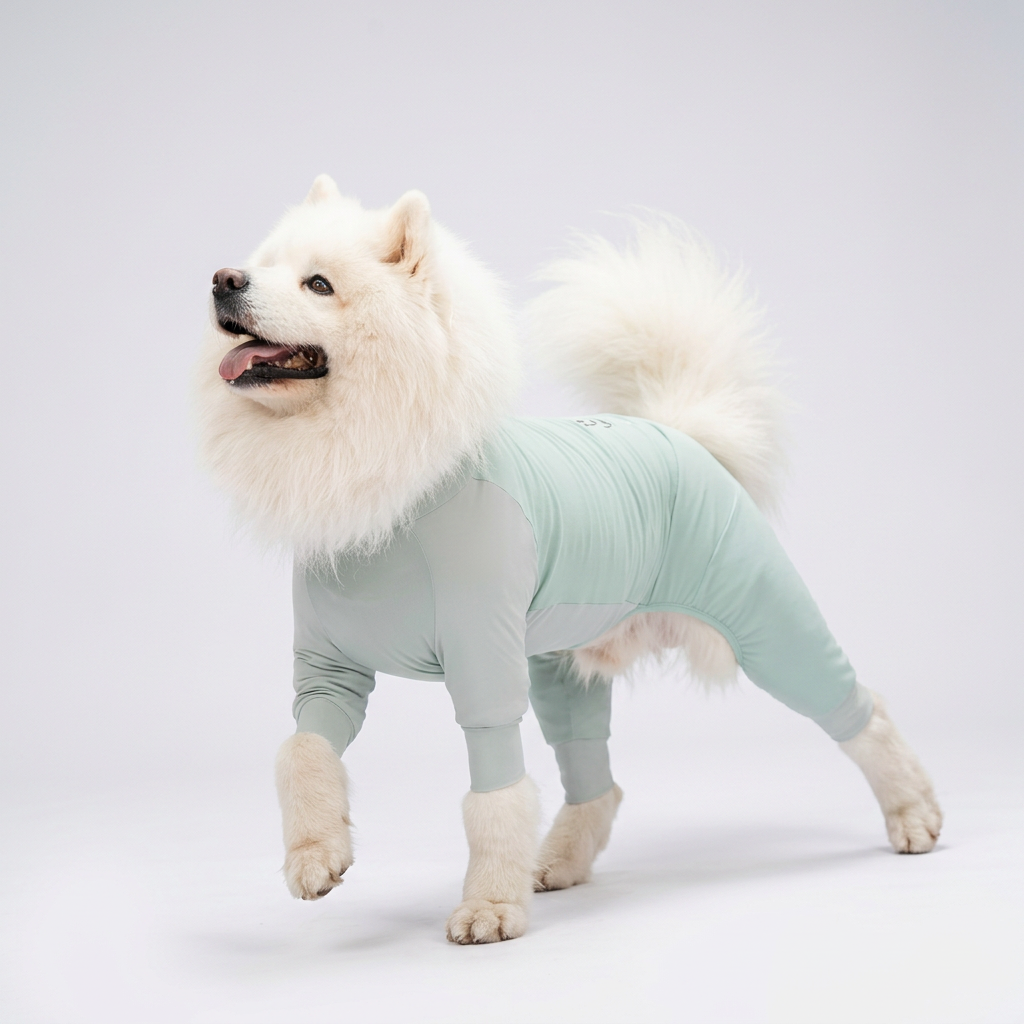
- Go with Physical Blockers (The Preferred Choice): A certified UPF 50+ 4-leg full-body sun suit covers major sun-safety blind spots, including the sensitive belly, groin, and underarms. It requires no reapplication and avoids the risks associated with product licking.
- Target the Exposed Spots: For areas clothes can’t cover (like the bridge of the nose and ear tips), apply a specific dog-safe sun balm 15 minutes before heading out.
- Time Your Outings: Avoid the peak UV hours between 10:00 AM and 4:00 PM. Seek shady trails or forest parks.
- Watch Out for Reflective Surfaces: Sand, concrete, and water reflect a significant amount of UV rays onto your dog’s belly. Control their time in these environments.
🐾 Keep Your Pup Protected All Summer Long
Don’t let painful dog sunburn ruin your beach trips. Our Cooling Full-Body Sun Suits keep your pup safe, cool & comfy on every outdoor adventure.
Shop Our Full Summer Protective Gear Collection