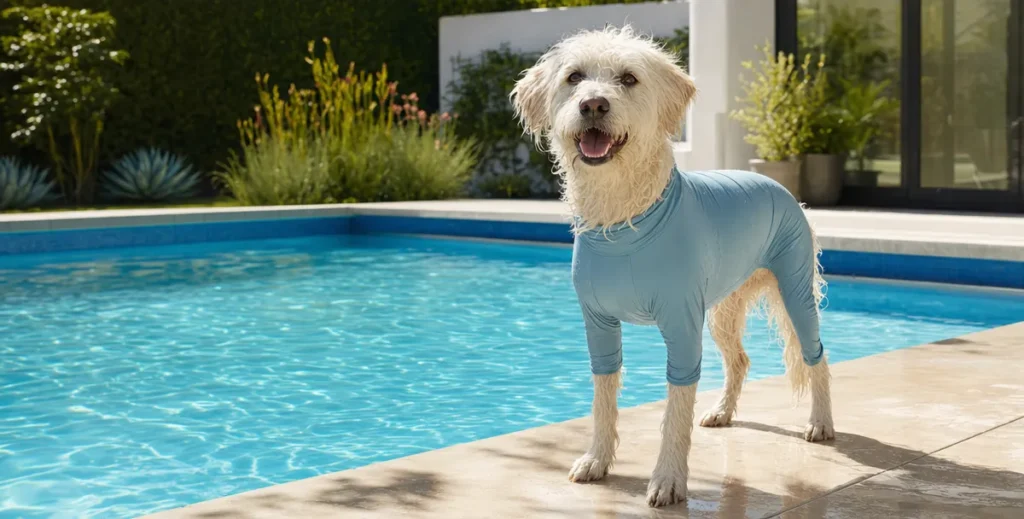
No sand in the fur, no long drive, no waves to worry about — just a splash in the backyard pool. It’s easy to feel like pool days are the “easy mode” version of summer, especially compared to a full-on beach trip or a day out on the boat.
Turns out, pool days come with their own little surprises — one involves the sun, and the other is basically invisible until it’s already happened to your dog’s gear.
Chlorine Isn’t Totally Harmless
A little splashing or drinking from a normal, well-kept pool usually isn’t a big deal for your dog. Where it gets riskier is right after a pool’s been “shocked” with extra chlorine — that water can genuinely irritate the mouth and stomach, so it’s smart to wait a day before letting your dog back in.
More commonly, what shows up over a summer of pool visits is smaller stuff: dry or itchy skin, a duller-looking coat, red or watery eyes. Nothing dramatic — just worth a good rinse afterward, the same way you wouldn’t skip rinsing after the ocean.
Yes, Pools Reflect UV Too
You’d think a backyard means less sun exposure, but pools have their own version of the sand-and-water combo we cover in the beach guide.
Here’s the part that surprises people: it’s not really the water doing most of the bouncing — it’s the concrete and tile around it. Pavement and concrete generally reflect around 10% of UV back upward, and lighter-colored surfaces (like most pool decking) tend to reflect even more than darker ones. Add the water surface on top of that, and your dog is picking up sunlight from above and reflected light from below at the same time — with the belly and underarms, already thin-furred, catching most of it.
Chlorine and Saltwater Don’t Damage Fabric the Same Way
If your dog swims in both the ocean and the pool, you might assume the pool is the “gentler” one for their gear. It’s not gentler — just different.
Think of saltwater like sandpaper. As it dries, salt crystallizes in the fabric, and movement rubs those crystals against the fibers. It’s rough, but mostly surface-level, and a good rinse stops it before it adds up.
Chlorine works differently. Rather than sitting on top of the fabric like sand does, it can gradually react with the stretchy fibers in a nylon-spandex blend over repeated exposure, and that kind of change doesn’t reverse with a rinse. It’s part of why an older suit that’s seen a lot of pool time can start feeling looser or less snug over a season, even if it still looks fine on the outside.
So a quick shake-off doesn’t really do the job the way it might after rolling around in the grass — the longer chlorine sits in the fabric, the more chances it has to keep affecting it.
The 3 Things That Actually Matter After a Swim
You don’t need a whole routine — just these three, ideally right after you’re out of the pool:
- Rinse with plain water, right away. Don’t wait until you’re done with everything else — sooner is better.
- Skip the wringing. Twisting or squeezing the fabric hard can stretch it out, especially fibers that have just been through a swim. Press or pat out the extra water instead.
- Dry it in the shade, not full sun. This one trips people up — drying a chlorine-exposed suit in direct sunlight adds UV exposure on top of everything else, which likely doesn’t help things.
Want the full playbook on washing, drying, and making a sun suit last a whole season — not just pool days? That’s its own topic — we’ll have a dedicated guide on [everyday sun suit care and storage] (link to be added once published) soon.
If Pool Days Are a Regular Thing This Summer
The same logic that applies when deciding whether beach or boat gear needs different handling applies here too — a suit that dries fast and doesn’t stay damp for hours is doing your dog a favor twice over: less time for chlorine to sit against the fibers, and less time feeling heavy and wet. Whether you go with ours or another brand, quick-drying fabric generally holds up better against repeated pool exposure than something that stays damp for hours. Our UPF 50+ collection is built with that in mind — worth a look if your pup is basically part-fish this summer.
Quick Answers
Is pool water actually dangerous for dogs? Not in a normal, well-maintained pool — a little splashing or drinking usually isn’t a big deal. It’s mainly worth avoiding right after a pool’s been shock-treated, when chlorine levels are much higher than usual.
Do pools really have UV reflection like the beach does? Yes, though the source is different. It’s mostly the light-colored concrete or tile around the pool, plus the water surface itself, bouncing UV back up at your dog.
Is chlorine worse for a sun suit than saltwater? They’re just different. Saltwater causes more surface-level, physical wear that a rinse mostly stops. Chlorine can gradually affect the fabric’s stretch over repeated exposure in a way that doesn’t reverse with rinsing.
What’s the single most important thing to do after a pool swim? Rinse with fresh water as soon as possible. The other steps — skipping the wringing, drying in shade — matter too, but a prompt rinse does the most work.
Can I use the same suit for both pool and ocean swimming? Yes — the fabric considerations (quick-dry, breathable) apply to both. Just rinse after each type of swim, since the two are working against the fabric in different ways.