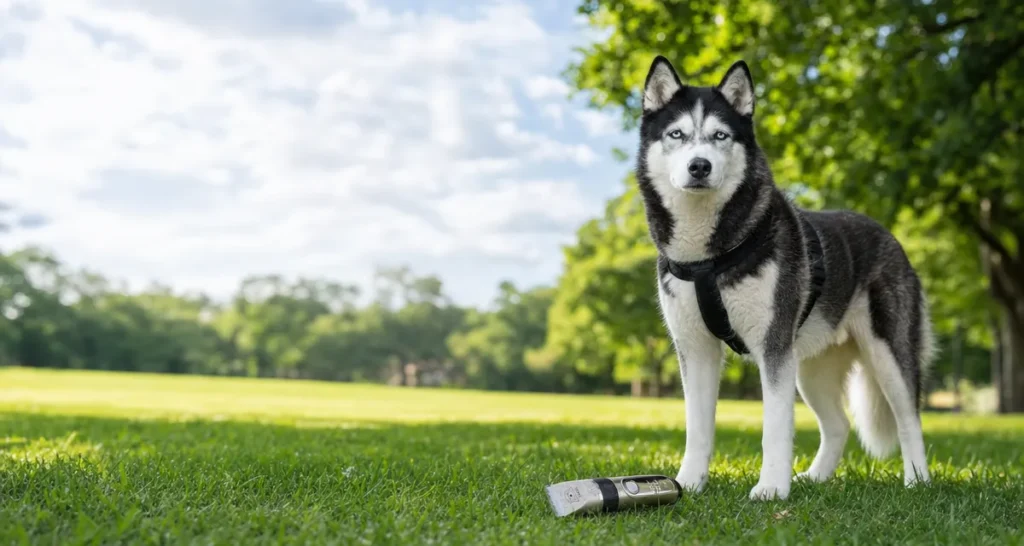
Every summer, the same well-meaning idea comes up: it’s hot, so why not shave the coat off and let your dog’s skin breathe?
It feels logical. It’s also usually the wrong move — and not for a subtle reason.
Fur Isn’t Just Fur
Many dogs — Golden Retrievers, Huskies, Corgis, German Shepherds, and similar breeds — have what’s called a double coat: a coarser outer layer, and a soft, dense undercoat underneath it.
Here’s the part most people never think about: the two layers aren’t really about “more warmth.” They work like insulation — the same way a good jacket keeps you warm in winter and cooler in summer.
The trick isn’t the fur itself. It’s the still air trapped between the two layers. That trapped air is what actually does the work — holding heat in when it’s cold, and keeping outside heat from reaching the skin when it’s hot.
Shave that layer off, and the insulation disappears in both directions. The skin is now exposed directly to heat and UV, with almost nothing between it and the sun. Dogs also have very few sweat glands — mostly in their paw pads — so once that barrier is gone, they can’t cool down the way we do. The American Kennel Club has noted that a dog’s coat functions as a form of natural insulation, and that shaving a double-coated breed can actually raise the risk of both overheating and sunburn, rather than lowering it.
The Part Most Owners Never Hear About
Here’s something else that rarely comes up: shaved fur doesn’t always grow back the way you’d expect.
In some dogs, shaving doesn’t just remove hair for a while — it can genuinely change how the coat grows back.
There’s a real, documented condition for this called post-clipping alopecia. Essentially, the hair follicles stall out after a close shave and take much longer than normal to start growing again. According to the University of Minnesota’s veterinary dermatology handbook, regrowth after clipping typically begins within 3 to 4 months in a healthy dog — anything slower than that is considered unusual. VCA Animal Hospitals notes that in “plush-coated” breeds like Huskies, Samoyeds, and Pomeranians, this delayed regrowth can last as long as two years, and the coat that comes back may look and feel noticeably different from the original.
Shaving isn’t always a reversible decision the way it looks in the moment.
So Which Dogs Should Actually Avoid It?
| Coat Type | Examples | Shave for Summer Heat? |
|---|---|---|
| Double coat | Golden Retriever, Husky, Corgi, German Shepherd, Samoyed | Not recommended — this is the group most likely to run into the problems above |
| Single coat / short coat | French Bulldog, Dachshund, Boxer | Not really applicable — there’s no insulating undercoat to lose either way |
| Medical necessity (severe matting, surgery, skin treatment) | Any breed | Yes — this is a different situation entirely, guided by a vet, not a summer comfort choice |
If your dog is double-coated and just wants to feel a little cooler, a thorough brush-out to clear loose undercoat does more good than a shave — it keeps the insulating layer intact while getting rid of what’s no longer needed.
Where This Leaves You
Once that coat is shaved down, something else has to pick up the job of shielding the skin — and that’s really a question about density, whether you’re talking about fur or fabric. It’s the same idea we walked through in our fabric breakdown on UPF 50+ and how to actually verify sun protection claims: a tightly packed layer blocks more than a thin or loose one, no matter what it’s made of.
Quick Answers
Should I shave my double-coated dog to help them stay cool in summer? Generally, no. The coat works as insulation in both directions — shaving it off removes the layer that would otherwise slow outside heat from reaching the skin, and can raise the risk of both overheating and sunburn.
Will the fur grow back the same after shaving? Not always. A condition called post-clipping alopecia can delay regrowth by months, and in plush-coated breeds like Huskies or Samoyeds, by up to two years — with the new coat sometimes looking or feeling different from before.
What should I do instead if my dog needs to cool down? A thorough brush-out to remove loose undercoat helps more than shaving. It keeps the insulating air layer intact while clearing out what your dog doesn’t need anymore.
Is shaving ever okay? Yes — for medical reasons like severe matting, surgery prep, or skin treatment, guided by a vet. That’s a different situation from shaving purely for summer comfort.
Do single-coated or short-haired breeds have the same risk? Not really — breeds like French Bulldogs, Dachshunds, or Boxers don’t have the insulating undercoat structure to lose in the first place, so this particular concern doesn’t apply to them the same way.