Q1: Why do white dogs seem so much more prone to sunburn?
Skin under dark or black fur has natural melanin that helps absorb and reduce the amount of UV reaching the skin. Skin under white, cream, or light-gold fur is often pale pink underneath, with almost none of that natural protection. On top of that, the nose, ear tips, eye area, belly, and groin already have thinner fur to begin with, so UV rays — including the reflected kind bouncing up off sand or concrete — reach the skin much more easily.
Q2: How do I tell if my dog is actually sunburned, versus just overheated?
Watch for a pink nose, red or hot-feeling ear tips or belly, and more scratching or licking than usual in those spots. More serious cases show peeling or scabbing, and blisters or oozing mean it’s time to see a vet rather than treat it at home. Dogs with sunburn may also resist going outside, actively seek shade, or come home and flop straight onto a cool floor without wanting to get up.
If your dog is already sunburned, we’ve put together a dedicated first-aid guide on what to do right away and the common mistakes to avoid: Is Your Dog Sunburned? 5 Steps for Immediate Relief (And Crucial Mistakes to Avoid)
Q3: Is repeated sunburn really that serious?
A single sunburn usually shows up as redness and peeling, and tends to settle down after a few days of rest. But repeated sun exposure and skin damage can develop into chronic sun-related skin irritation, and in more serious cases, thin-skinned areas like the ears and nose carry some risk of certain skin conditions, including some forms of skin cancer, over time. That’s part of why sun protection for light-coated dogs works better as an ongoing habit rather than something you only think about a few times each summer.
Q4: Can I just use human sunscreen on my dog?
We’d recommend against it. Many human sunscreens contain zinc oxide, which can cause anemia or stomach upset if a dog licks it off. If you do want to use a sunscreen product, look for a dog-specific formula that’s zinc-oxide-free, alcohol-free, and free of heavy fragrance, and apply it mainly to exposed areas like the nose, ear tips, and belly. It also helps to distract your dog with a toy or treat right after applying, so they’re less tempted to lick it straight off.
Wondering how sunscreen and sun suits stack up against each other, and whether you really need both? Here’s a full breakdown: Dog Sunscreen vs. Sun Suits: Which is the Safest Way to Protect Your Pup?
Q5: Won’t a sun suit just make my dog hotter and more uncomfortable?
That’s a fair concern, and we hear this question almost every summer — a lot of it comes down to the fabric itself. For everyday outings, a lightweight, breathable vest is usually enough — you don’t need a heavier full-body suit unless your dog is out for extended periods, or has a flat face or a thick double coat, in which case a looser cut with extra room under the arms helps a lot. One simple rule of thumb: once your dog is more active and starts panting steadily, it’s time to take the suit off and let them cool down. A sun suit isn’t a cooling suit.
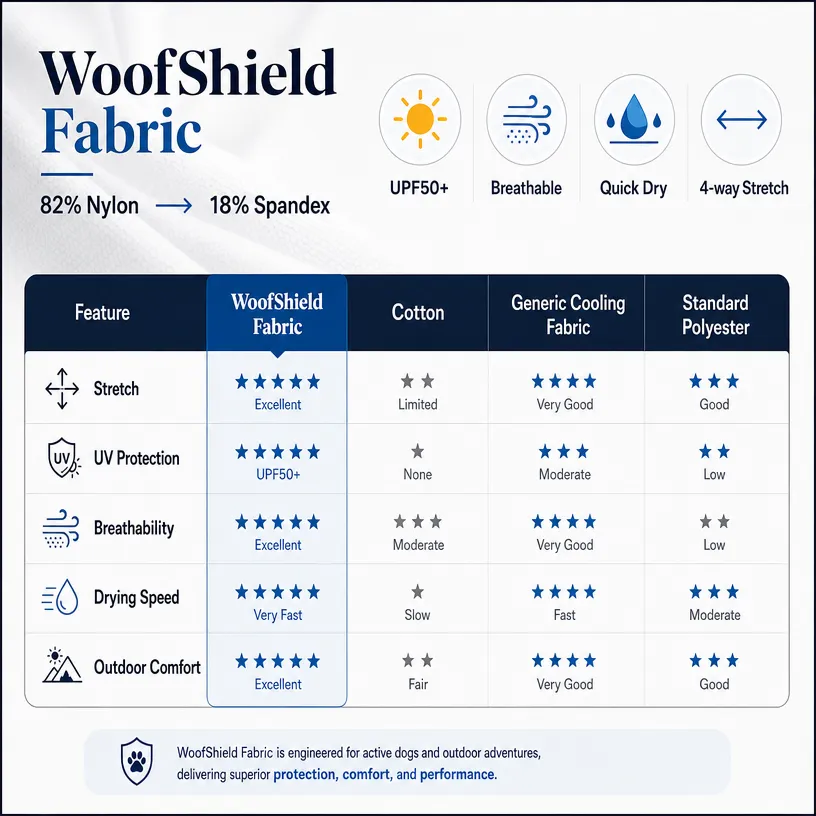
Fabric is really the deciding factor here. Take WoofShield’s own fabric as an example — an 82% nylon, 18% spandex blend that was selected for its combination of UPF protection, stretch, breathability, and quick-drying performance. Breathability and drying speed in particular are what determine how stuffy the suit feels and how quickly it dries out once it gets wet.
-
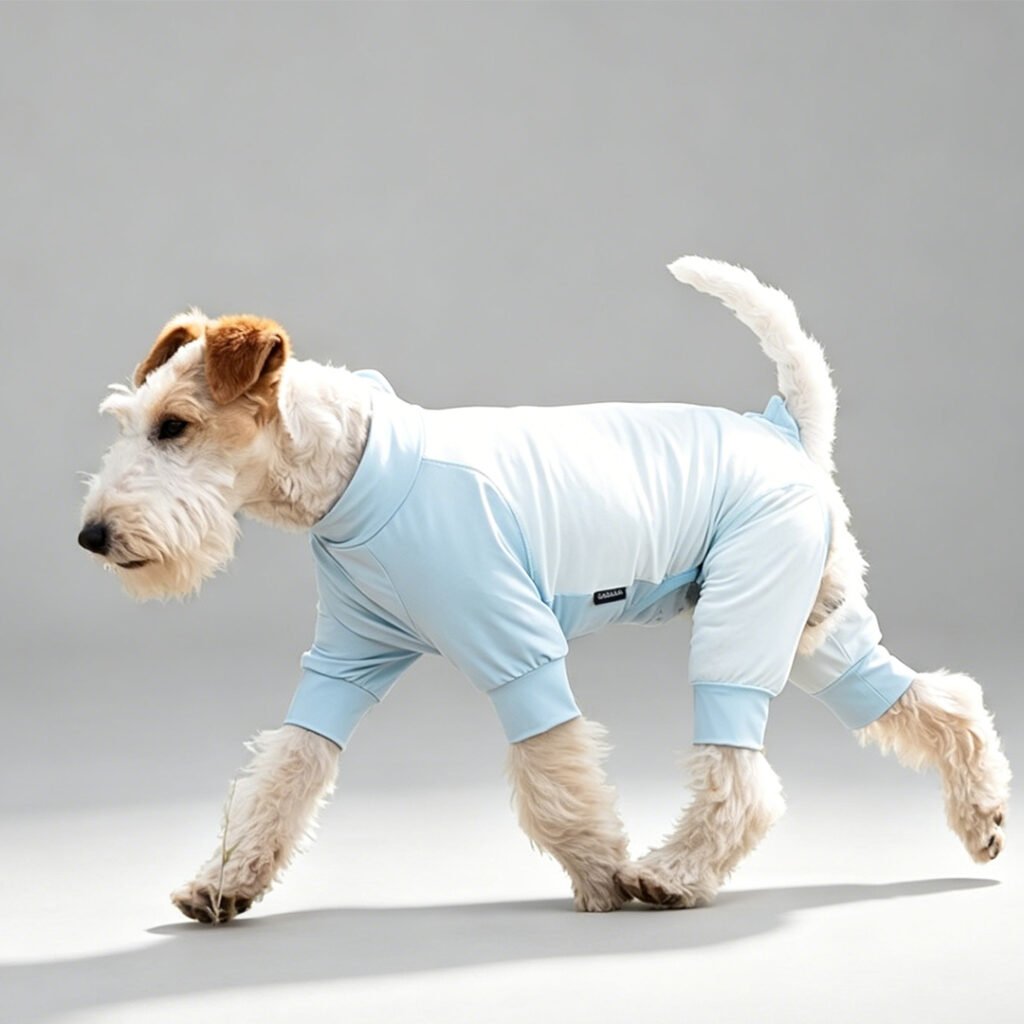
The UV Shield Suit
$45.00 -
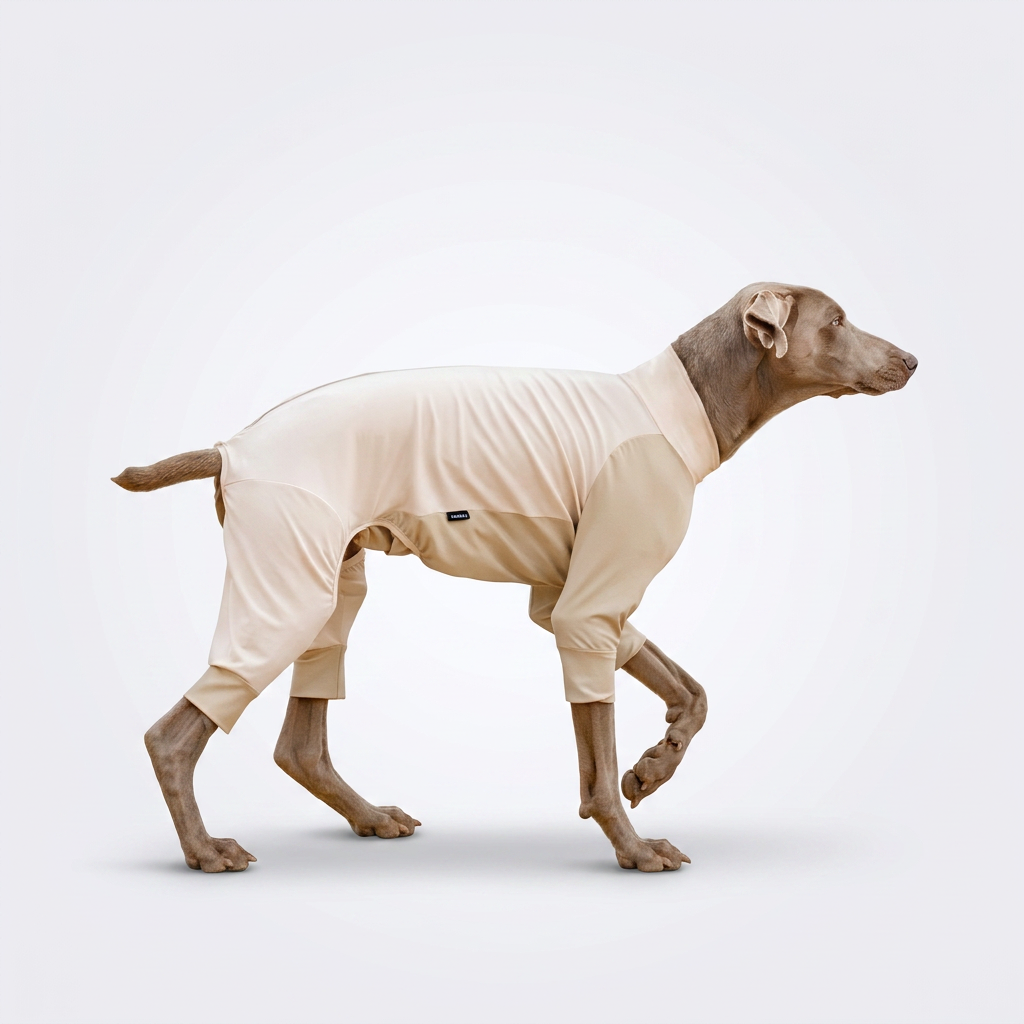
FlexAir UPF50+ Ice-Pocket Sun Shirt
$49.00
Q6: My dog fights me the first time I try putting on a sun suit — what do I do?
Almost every new dog owner runs into this. Your dog isn’t being difficult on purpose — it just doesn’t understand what the suit is yet, and a sudden new object on its body triggers an instinctive kind of tension. Rather than forcing it, ease in over a few days: let your dog sniff the suit first, then drape it over their back for a few seconds, then have them wear it briefly before taking it off, with treats throughout. Many dogs become more comfortable over time, though the pace varies quite a bit from dog to dog.
We wrote a full walkthrough of this exact adjustment process: Why Your Dog Hates Wearing Clothes at First (And How to Make It Easier)
Q7: Beyond a suit and sunscreen, what daily habits actually help?
A few things that cost nothing but genuinely make a difference: try to avoid walks between 10 a.m. and 4 p.m., when UV is at its strongest; keep visits shorter on highly reflective surfaces like sand, concrete, and shallow water; set up a shaded spot in the yard your dog can retreat to anytime; and don’t let your guard down on cloudy days — many UV rays, especially UVA, can still reach your dog even when it’s overcast.
Q8: Does a white coat turning yellow or feeling coarser have anything to do with sun exposure?
Sometimes, yes. Prolonged UV exposure is one possible contributor — it can oxidize white fur and leave it dry and prone to split ends, alongside other factors like drool staining, urine, grooming products, and age. It’s not just a cosmetic issue, either; a yellowing, coarser coat is often worth treating as a nudge to check on sun protection, rather than something to fix with grooming alone.
Q1: Why do white dogs seem so much more prone to sunburn?
Skin under dark or black fur has natural melanin that helps absorb and reduce the amount of UV reaching the skin. Skin under white, cream, or light-gold fur is often pale pink underneath, with almost none of that natural protection. On top of that, the nose, ear tips, eye area, belly, and groin already have thinner fur to begin with, so UV rays — including the reflected kind bouncing up off sand or concrete — reach the skin much more easily.
Q2: How do I tell if my dog is actually sunburned, versus just overheated?
Watch for a pink nose, red or hot-feeling ear tips or belly, and more scratching or licking than usual in those spots. More serious cases show peeling or scabbing, and blisters or oozing mean it’s time to see a vet rather than treat it at home. Dogs with sunburn may also resist going outside, actively seek shade, or come home and flop straight onto a cool floor without wanting to get up.
If your dog is already sunburned, we’ve put together a dedicated first-aid guide on what to do right away and the common mistakes to avoid: Is Your Dog Sunburned? 5 Steps for Immediate Relief (And Crucial Mistakes to Avoid)
Q3: Is repeated sunburn really that serious?
A single sunburn usually shows up as redness and peeling, and tends to settle down after a few days of rest. But repeated sun exposure and skin damage can develop into chronic sun-related skin irritation, and in more serious cases, thin-skinned areas like the ears and nose carry some risk of certain skin conditions, including some forms of skin cancer, over time. That’s part of why sun protection for light-coated dogs works better as an ongoing habit rather than something you only think about a few times each summer.
Q4: Can I just use human sunscreen on my dog?
We’d recommend against it. Many human sunscreens contain zinc oxide, which can cause anemia or stomach upset if a dog licks it off. If you do want to use a sunscreen product, look for a dog-specific formula that’s zinc-oxide-free, alcohol-free, and free of heavy fragrance, and apply it mainly to exposed areas like the nose, ear tips, and belly. It also helps to distract your dog with a toy or treat right after applying, so they’re less tempted to lick it straight off.
Wondering how sunscreen and sun suits stack up against each other, and whether you really need both? Here’s a full breakdown: Dog Sunscreen vs. Sun Suits: Which is the Safest Way to Protect Your Pup?
Q5: Won’t a sun suit just make my dog hotter and more uncomfortable?
That’s a fair concern, and we hear this question almost every summer — a lot of it comes down to the fabric itself. For everyday outings, a lightweight, breathable vest is usually enough — you don’t need a heavier full-body suit unless your dog is out for extended periods, or has a flat face or a thick double coat, in which case a looser cut with extra room under the arms helps a lot. One simple rule of thumb: once your dog is more active and starts panting steadily, it’s time to take the suit off and let them cool down. A sun suit isn’t a cooling suit.
Fabric is really the deciding factor here. Take WoofShield’s own fabric as an example — an 82% nylon, 18% spandex blend that was selected for its combination of UPF protection, stretch, breathability, and quick-drying performance. Breathability and drying speed in particular are what determine how stuffy the suit feels and how quickly it dries out once it gets wet.
Show Image
Q6: My dog fights me the first time I try putting on a sun suit — what do I do?
Almost every new dog owner runs into this. Your dog isn’t being difficult on purpose — it just doesn’t understand what the suit is yet, and a sudden new object on its body triggers an instinctive kind of tension. Rather than forcing it, ease in over a few days: let your dog sniff the suit first, then drape it over their back for a few seconds, then have them wear it briefly before taking it off, with treats throughout. Many dogs become more comfortable over time, though the pace varies quite a bit from dog to dog.
We wrote a full walkthrough of this exact adjustment process: Why Your Dog Hates Wearing Clothes at First (And How to Make It Easier)
Q7: Beyond a suit and sunscreen, what daily habits actually help?
A few things that cost nothing but genuinely make a difference: try to avoid walks between 10 a.m. and 4 p.m., when UV is at its strongest; keep visits shorter on highly reflective surfaces like sand, concrete, and shallow water; set up a shaded spot in the yard your dog can retreat to anytime; and don’t let your guard down on cloudy days — many UV rays, especially UVA, can still reach your dog even when it’s overcast.
Q8: Does a white coat turning yellow or feeling coarser have anything to do with sun exposure?
Sometimes, yes. Prolonged UV exposure is one possible contributor — it can oxidize white fur and leave it dry and prone to split ends, alongside other factors like drool staining, urine, grooming products, and age. It’s not just a cosmetic issue, either; a yellowing, coarser coat is often worth treating as a nudge to check on sun protection, rather than something to fix with grooming alone.