From Sea Level to 9,000+ Feet, What Changes at Each Elevation
Pre-Trip Gear Checklist
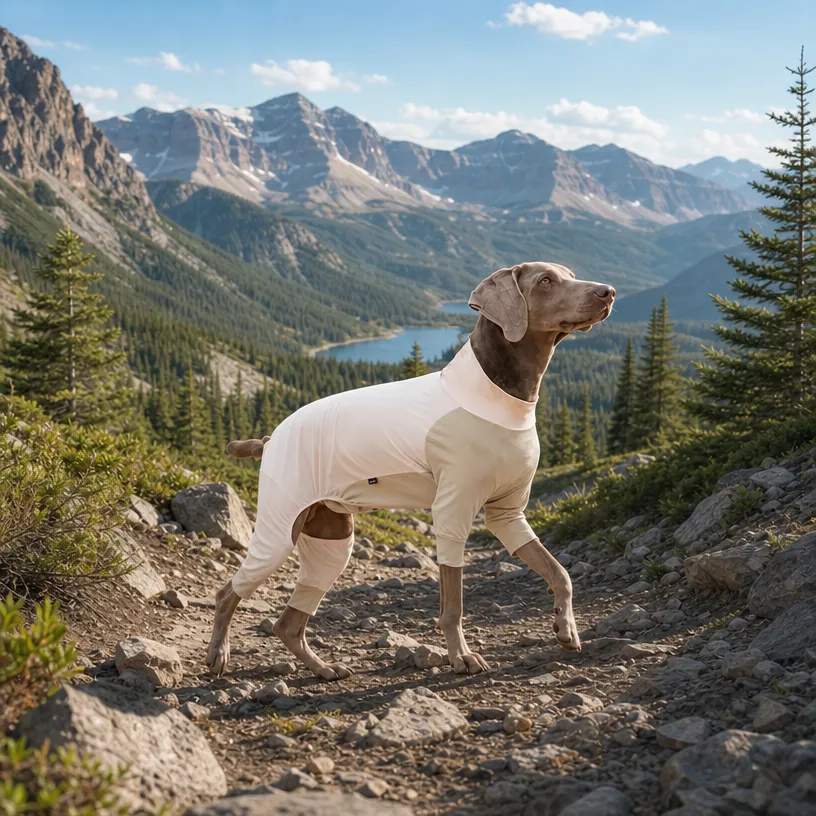
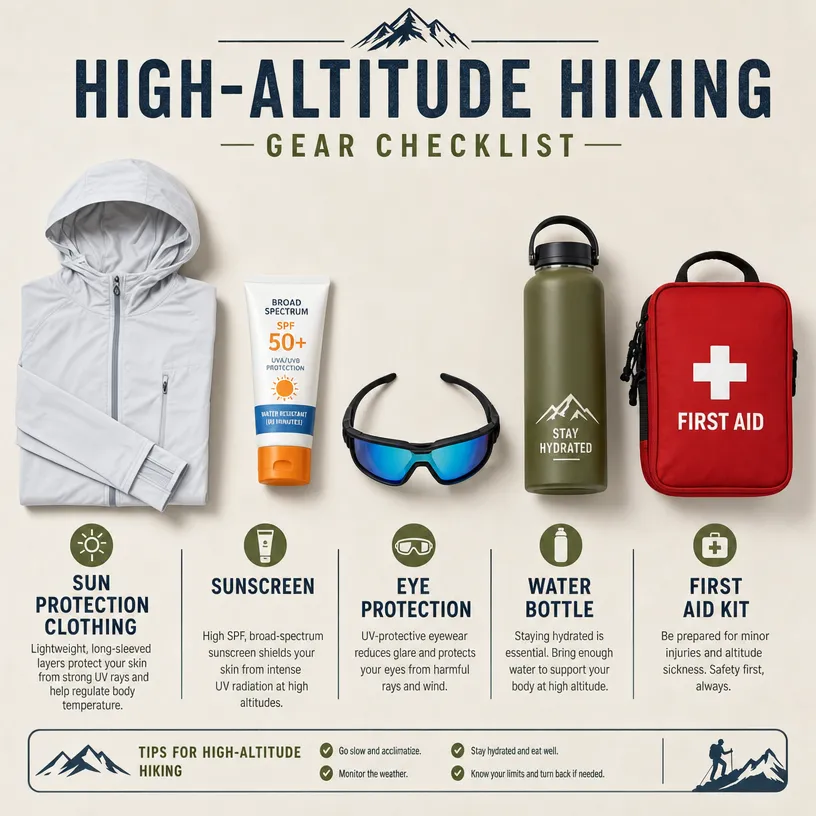
- ✓ Four-legged sun suit (UPF 50+)
- ✓ Pet-specific sunscreen (zinc-oxide-free)
- ✓ Plenty of drinking water (more than you’d bring at sea level)
- ✓ Portable water bowl
- ✓ Eye protection (if the route has any lingering snow)
- ✓ First-aid basics (wound care, paw pad supplies)
Reflection off city sidewalks and park grass is one variable — altitude is a completely different one. If you’ve read our piece on ground reflection in the city, that one was about surface material. This one is about a factor that’s much easier to overlook: elevation itself. Most Rocky Mountain trails sit between 8,000 and 14,000 feet, which happens to be exactly the range where UV intensity climbs sharply and dogs start becoming susceptible to altitude sickness. Rather than just “how sunny does it feel,” this piece is really about how the risk changes as you climb, and how your protection needs to climb with it.
(If you’re planning a full-day trip and want to cover more than just elevation — brush hazards, pacing, general trail wear — we’ve got a dedicated guide for full-day hikes as well.)
First, the Actual Relationship Between Altitude and UV
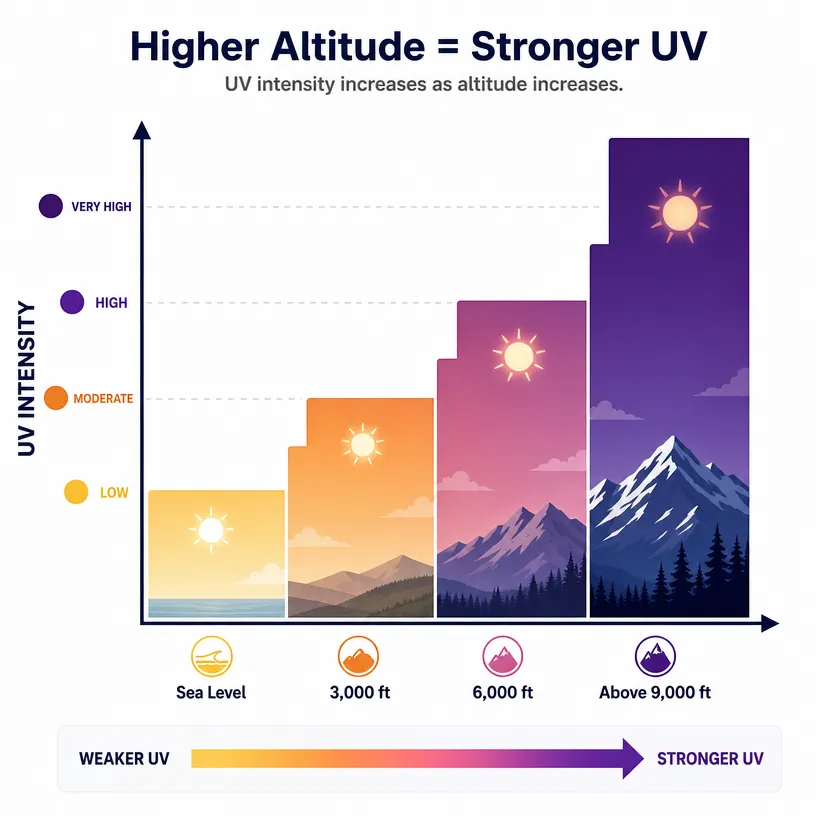
According to NIH and other sources, UV intensity increases by roughly 4–12% for every 1,000 feet of elevation gain, with the exact rate varying by study and region — there isn’t one single “correct” number here. Rather than fixating on a precise figure, a real comparison is more useful: one study measured UV-B levels at 8,500 feet in Vail, Colorado at roughly 60% higher than sea-level New York. That’s part of why so many owners feel like “it’s not as sunny as the beach” up in the mountains, only to find their dog sunburned worse than expected once they’re home.
Sea Level–3,000 ft: Your City Park Baseline
Most everyday dog walks — city parks, backyard lawns — sit in this elevation range, so it works well as a baseline. At this height, sunburn risk mostly comes from ground reflection (concrete, sand) and prolonged exposure, not elevation itself.
3,000–6,000 ft: Foothill Hikes, UV Starts Climbing Noticeably
Once you’re in this range, UV is already meaningfully higher than a city park, but the temperature often still feels comfortable — which makes it easy to let your guard down. Dogs usually aren’t showing clear signs of oxygen stress yet at this stage, but if the ascent is fast, they may start panting and taking breaks earlier than usual.
What to do at this elevation: This is where “upgraded” sun protection should start — a four-legged sun suit paired with spot sunscreen on the nose and ear tips, rather than waiting until you’re higher up to think about it. Cool temperatures don’t mean lower sunburn risk, which is exactly why altitude sunburn sneaks up on people — how it feels and how strong the UV actually is are two different things.
6,000–9,000 ft: Where Most Rocky Mountain Trails Sit, and Risk Rises Sharply
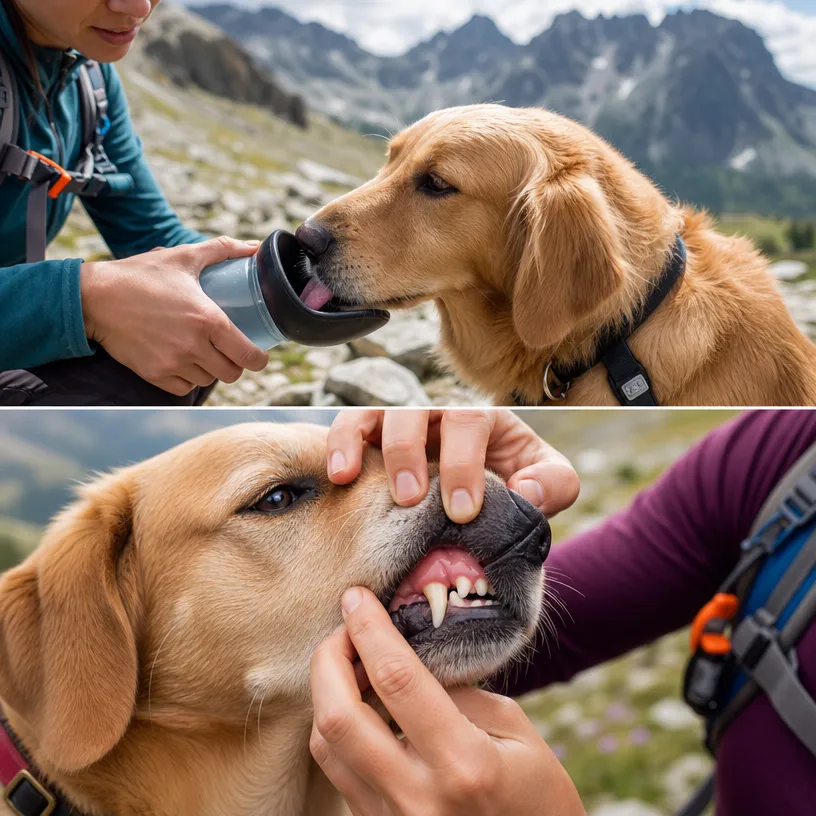
This is the primary elevation band for many classic Rockies trails. UV is now clearly higher than on flat ground, and rock surfaces reflect noticeably more than grass does — a dog resting on sun-baked rock is absorbing reflected UV on the belly the whole time. At the same time, 8,000 feet is roughly where altitude sickness in dogs starts becoming a real consideration. Watch for: panting that’s faster and more sustained than usual (not just heat-related), pale or bluish gums, noticeably low energy, or unsteady movement.
What to do at this elevation:
For UV, a full-coverage sun suit is a solid choice at this height — it covers the belly and inner thighs, areas that catch reflected light off rock and are genuinely hard to keep sunscreen on consistently. Dogs are panting more and working harder at this elevation, so sweat and drool come more frequently too — this is exactly where fabric breathability and quick-drying performance matter most. Our own 82% nylon, 18% spandex blend, for example, balances UPF protection with fast drying, so the suit doesn’t become extra baggage on top of the exertion your dog is already dealing with. For thin-skinned areas like ear tips and the chin, adding a zinc-oxide-free pet sunscreen on top is worth doing (we’ve written a separate comparison on how sunscreen and sun suits work best together, if you want the full breakdown).
For altitude, give your dog more time to adjust rather than setting a sea-level pace the moment you arrive. Check gum color and energy level periodically. Offer water often, even if they don’t seem thirsty — dry air and faster breathing at altitude means water loss happens quicker than at sea level, often before any obvious thirst signal shows up.
9,000+ ft: Near the Snowline, Where UV and Altitude Risk Both Stack Up
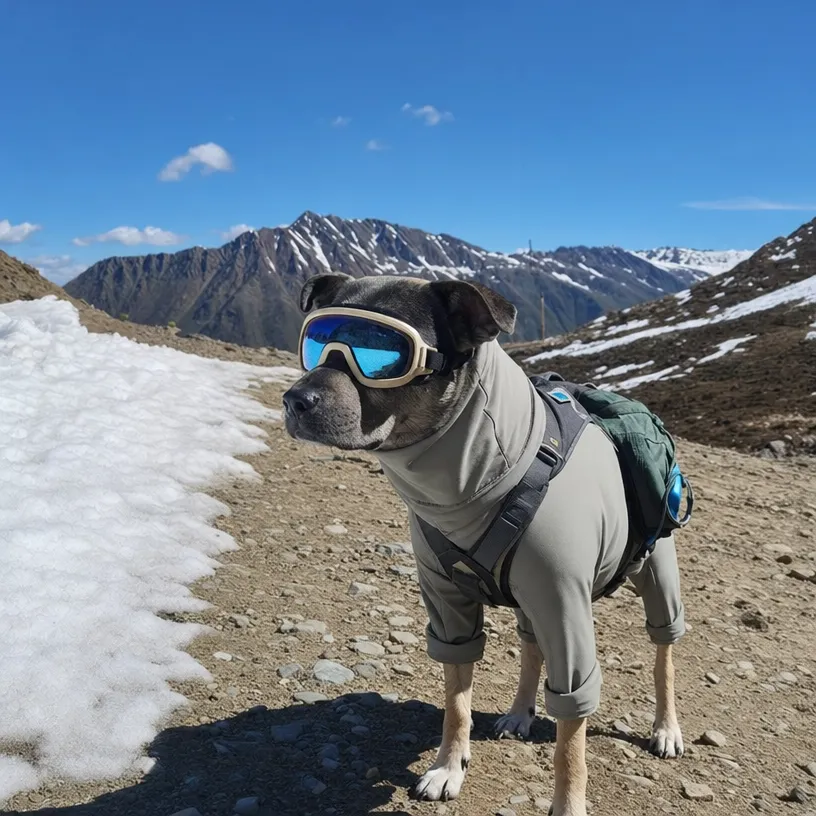
At this elevation, if the trail still has lingering snow, the risk jumps another level — snow can reflect roughly 80% of UV radiation, meaning your dog is taking on direct sun, ground reflection, and snow reflection all at once. Sunburn speeds up noticeably, and cold temperatures dull the pain response, so your dog may not show any obvious discomfort even while getting burned. Intense snow glare can also damage the cornea, leading to something like snow blindness — signs include unusual light sensitivity, squinting and watering eyes, and pawing at the face; severe cases need prompt veterinary care.
This elevation also carries the highest risk of altitude sickness. If your dog shows sustained panting, pale or bluish gums, marked lethargy, unsteady walking, or an inability to stand, descend to lower elevation immediately, and seek veterinary care if symptoms don’t improve. High-altitude pulmonary edema in dogs isn’t common, but it can progress quickly once it starts — this isn’t a “wait and see” situation. (If sunburn has already set in, we have a dedicated first-aid guide on what to do right away.)
What to do at this elevation:
Check current trail conditions before heading out if you’re unsure whether there’s snow on the route, and bring UV eye protection if there is. If your dog is already in a sun suit, most of the body is already covered — you’re really just adding eye protection on top, not rebuilding the whole setup from scratch.
Try to avoid making a dog’s first high-altitude experience a direct push into this range — if the plan is to reach 9,000+ feet, spending a day at a mid-range elevation first is a lot safer than going straight to the top. Keep checking in throughout the hike rather than only when something looks obviously wrong — a lot of the risk at this elevation doesn’t show itself until it’s already fairly advanced.
A Few Things That Matter Regardless of Elevation
- Human sunscreen risk gets worse at altitude. Dry air makes a dog’s skin and nose drier, which means more licking — if it’s a human sunscreen with zinc oxide, the odds of ingestion go up, and that can lead to vomiting, diarrhea, or in more serious cases, toxicity.
- Untreated natural water sources aren’t a great idea for dogs. If your dog drinks from a stream or spring on the trail, it’s not unusual to see diarrhea or vomiting show up over the following day or two — often from parasites or bacteria. Bringing enough water from home is the safer bet.
- Don’t rush into a bath the moment you’re home. After a high-altitude hike, your dog’s body is still recovering from the day’s exertion — waiting a day or two until they’re clearly back to normal before bathing is a reasonable approach, rather than washing off the “dirt” right away.
- Don’t plan mileage the way you would at sea level. The same distance is a lot more taxing on the body at altitude, especially for a dog on their first high-altitude trip — it’s worth scaling back both distance and pace to leave some margin.
Final Thoughts
High-altitude hiking is never just “the sun is stronger” for a dog — low oxygen and intense UV are happening at the same time, and the signs are often subtler than what you’d see at sea level, easy to write off as “just tired.” Keeping “the higher you go, the more protection and observation should scale up” in mind is a lot more reliable than figuring it out on the fly once you’re already up there.
Planning a trip to the Rockies? Explore our lightweight, breathable UPF 50+ collection, sized from small companions to big adventure dogs — shop the collection here.