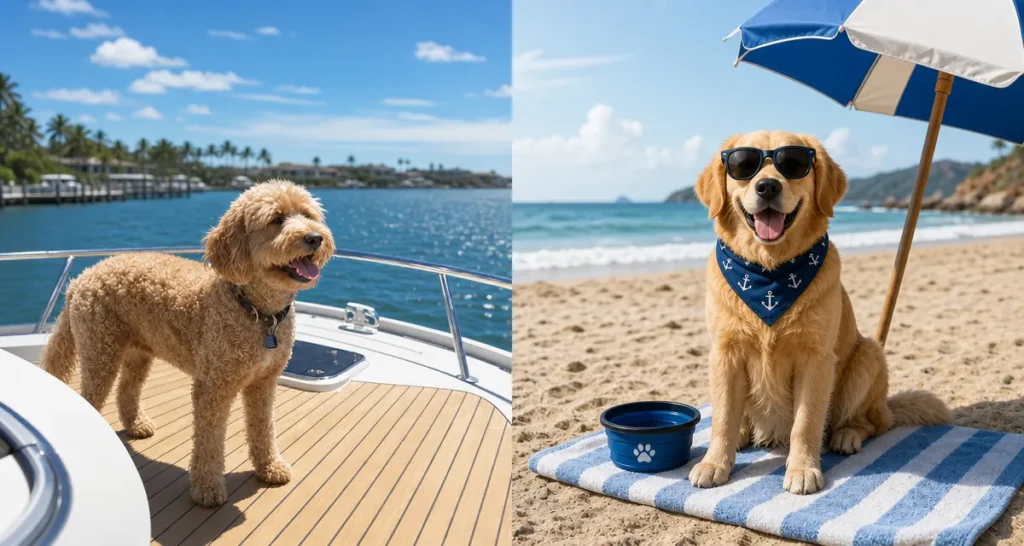
Do You Need One Sun Suit or Two? Sand vs. Salt, Explained
Deciding between a beach day and a day out on the boat usually isn’t about which one is more fun — it’s about figuring out where the real risks differ and whether you actually need separate gear. We’ve written full guides on beach day sun protection for dogs and sun protection for a full day on the boat already. This one’s for the questions that come up once you’ve read both and still aren’t sure how they compare.
Q1: Is a boat really more likely to sunburn my dog than the beach?
Yes, and the reason comes down to how many reflective surfaces are involved. At the beach, UV mostly comes from direct sunlight plus some scattered reflection off the sand. On a boat, your dog is dealing with direct sun, reflection off the water, and a second bounce off a light-colored deck — three sources instead of one or two.
To put some real numbers behind that: according to NOAA’s environmental health research, water reflects roughly 5–30% of UV depending on how choppy it is, sand reflects around 15%, and a light-colored fiberglass deck reflects about 9%. Line those up and it’s easy to see why a boat adds up to more total exposure than a beach does — especially when your dog is lying on the deck, since the belly and chin (areas that almost never see direct sun anywhere else) end up absorbing reflected UV from below the whole time. That’s usually what’s behind the classic complaint: “the beach was fine, but a few hours on the boat and they were red.”
Q2: Can I use the same sun suit for both, or do I need separate gear?
The same suit works for both — you don’t need to buy separately for each. A properly made dog sun suit (UPF 50+, quick-dry breathable fabric) should already be built to handle both situations: the beach needs it to hold up against sand abrasion and direct sun, and a boat needs it to handle saltwater and reflected UV. Neither of those requirements actually conflicts with the other at the fabric level.
Our own 82% nylon, 18% spandex blend was built with exactly this kind of cross-scenario use in mind — UPF 50+ coverage that also dries quickly, so it doesn’t turn heavy or clingy after a swim or a sweaty afternoon. On a boat, you can even layer it underneath a life jacket without affecting buoyancy, and it cuts down on the chafing a life jacket alone can cause. The one thing that genuinely doesn’t cross over well is a purely decorative cotton beach shirt with no UPF rating and no water resistance — but that’s not really sun-protection gear to begin with, regardless of which setting you’re in.
-
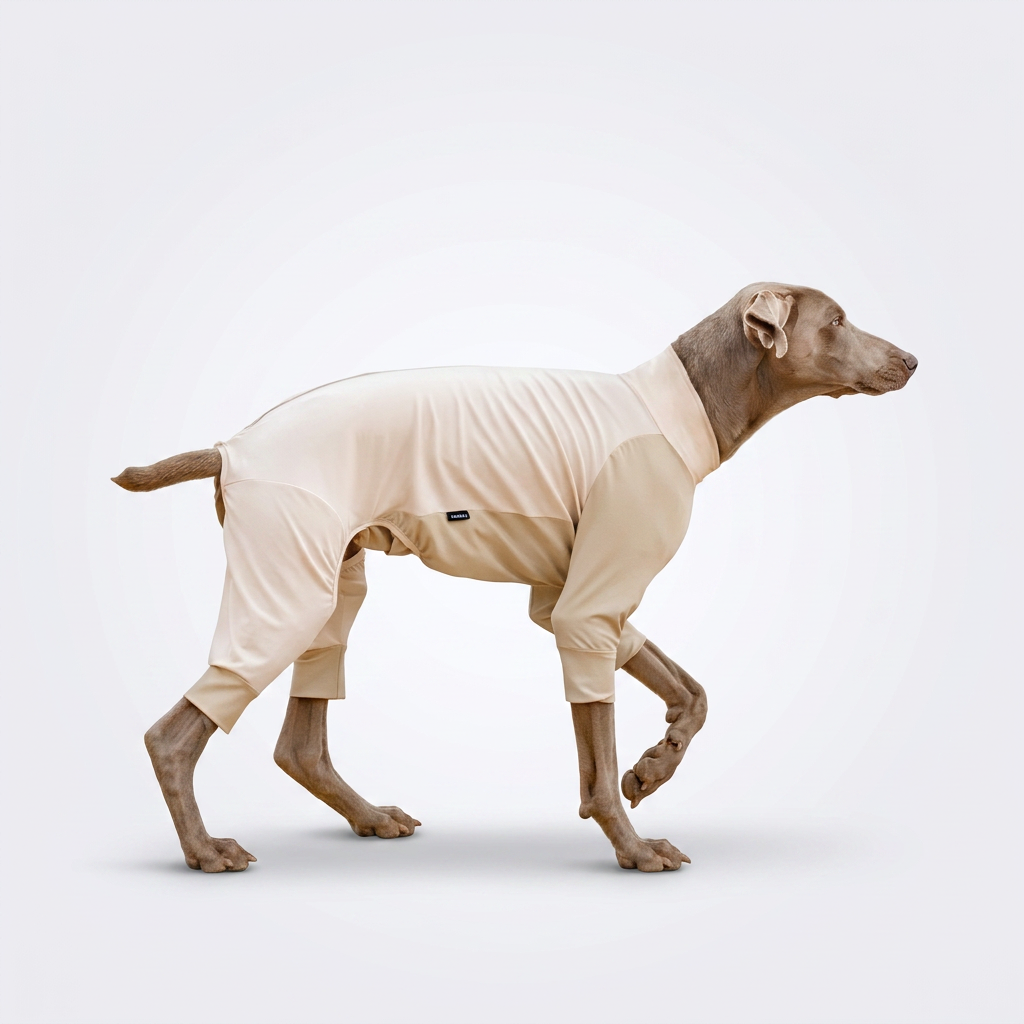
FlexAir UPF50+ Ice-Pocket Sun Shirt
$49.00 -

The UV Shield Suit
$45.00
Q3: We’re doing both in one day — boating, then heading to shore for beach time. How should we handle protection?
For a combined “boat plus beach” day, it helps to break it into stages rather than applying one blanket routine for the whole trip:
- 15–20 minutes before you leave: A full application of zinc-oxide-free pet sunscreen, focused on the nose, ear tips, and belly, then the sun suit goes on.
- While underway: Reapply sunscreen to exposed areas every 1–2 hours, and immediately after any swim. Keep your dog from lying directly on sun-exposed deck for long stretches — a shaded corner works better — and keep fresh water on hand throughout.
- Transitioning to shore: Rinse the paws and belly with fresh water before stepping onto the sand, so the salt doesn’t mix with sand and become harder to clean later. Shake off any loose sand, then reapply sunscreen once more.
- At the end of the day: A full rinse comes first — salt before sand — with extra attention to the toes and ears, so nothing gets left behind to cause skin irritation.
Q4: Which is more of a hassle to clean up afterward — sand or salt?
It depends on which kind of “hassle” you mean. Sand is more annoying in the short term. Salt does more damage over the long term.
Beach sand works its way into fur, paw pads, ears, and even between the toenails — wet sand sticks to the base of the coat, dry sand just keeps shedding everywhere, and long-haired dogs are especially hard to get fully clean. It’s the more obvious annoyance, tracked into the car and around the house, but it’s not particularly hard to deal with: a towel and a brush handle most of it on the spot, and it doesn’t do much direct damage to the skin.
Salt from the ocean is dissolved in water, so it’s not as visible, but once it dries it crystallizes on the fur and skin and keeps pulling moisture out — that’s what leads to itching, dryness, and redness, and repeated exposure over time leaves the coat dry and brittle. Salt really does need a thorough fresh-water rinse to fully clear, and dogs with sensitive skin often do better with a dog-specific shampoo on top of that, or skin issues can show up within a couple of days. Metal hardware and leashes take a beating from salt too and need their own cleaning.
Short version: sand is the visible annoyance, salt is the quiet damage.
Q5: How is the emotional or stress experience different between the two?
A boat tends to create ongoing physical stress. A beach is more about emotional ups and downs.
On a boat, the main source of stress is the constant motion disrupting your dog’s inner-ear balance — essentially seasickness — which shows up as drooling, vomiting, or low energy. Combined with a confined space and no stable ground to stand on, your dog has no way to just walk away from the discomfort, which tends to lower their sense of security. Common signs include reluctance to board, hiding in a corner the whole trip, heavier panting, and going off food or water.
The beach is an open space with stable ground underfoot, so most of what looks like “stress” there is actually overexcitement — the sound of waves, unfamiliar smells, people and birds coming and going all add up to sensory overload rather than genuine fear. A dog who’s specifically nervous about water usually settles down quickly once they’re away from the waterline.
If your dog seems unusually resistant to a new environment like this, it’s not necessarily “afraid of boats” or “afraid of the beach” specifically — our guide on easing a dog into wearing a sun suit for the first time covers a gradual approach that works well for new environments too.
Q6: Beyond sunburn, what other risks are genuinely different between the two?
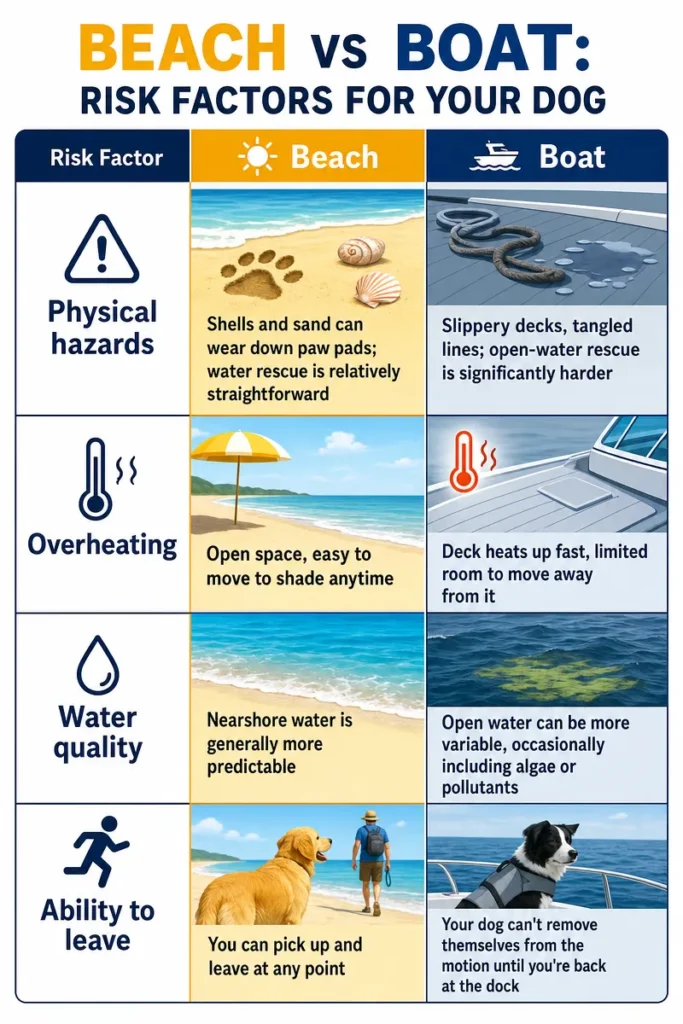
The table makes the pattern pretty clear: beach risks tend to be localized and fixable on the spot, while boat risks tend to be more all-or-nothing once they start — which is part of why boat days call for more proactive prep than a “figure it out as you go” beach trip does.
Final Thoughts
Beach versus boat isn’t really an either-or decision — it’s more about how to handle the switch between them in the same trip. Gear-wise, there’s no need to buy two of everything: one reliable, versatile sun suit plus a water-resistant sunscreen covers both. What actually needs to change is your pacing and aftercare — more proactive protection and more frequent check-ins on the boat, more thorough cleanup once you’re off the sand.
Ready for this summer’s water adventures? Check out our lightweight, breathable UPF 50+ collection, built for both beach and boat days.